The Basics of Drywall Installation

October 4, 2023

Most of us have a basic understanding of what drywall is.  We are surrounded by it most of our lives, after all!  When it comes to how those drywall walls got there, however, most people don’t know much.  If you’ve ever been curious about the process of creating walls out of drywall, this guide is for you!


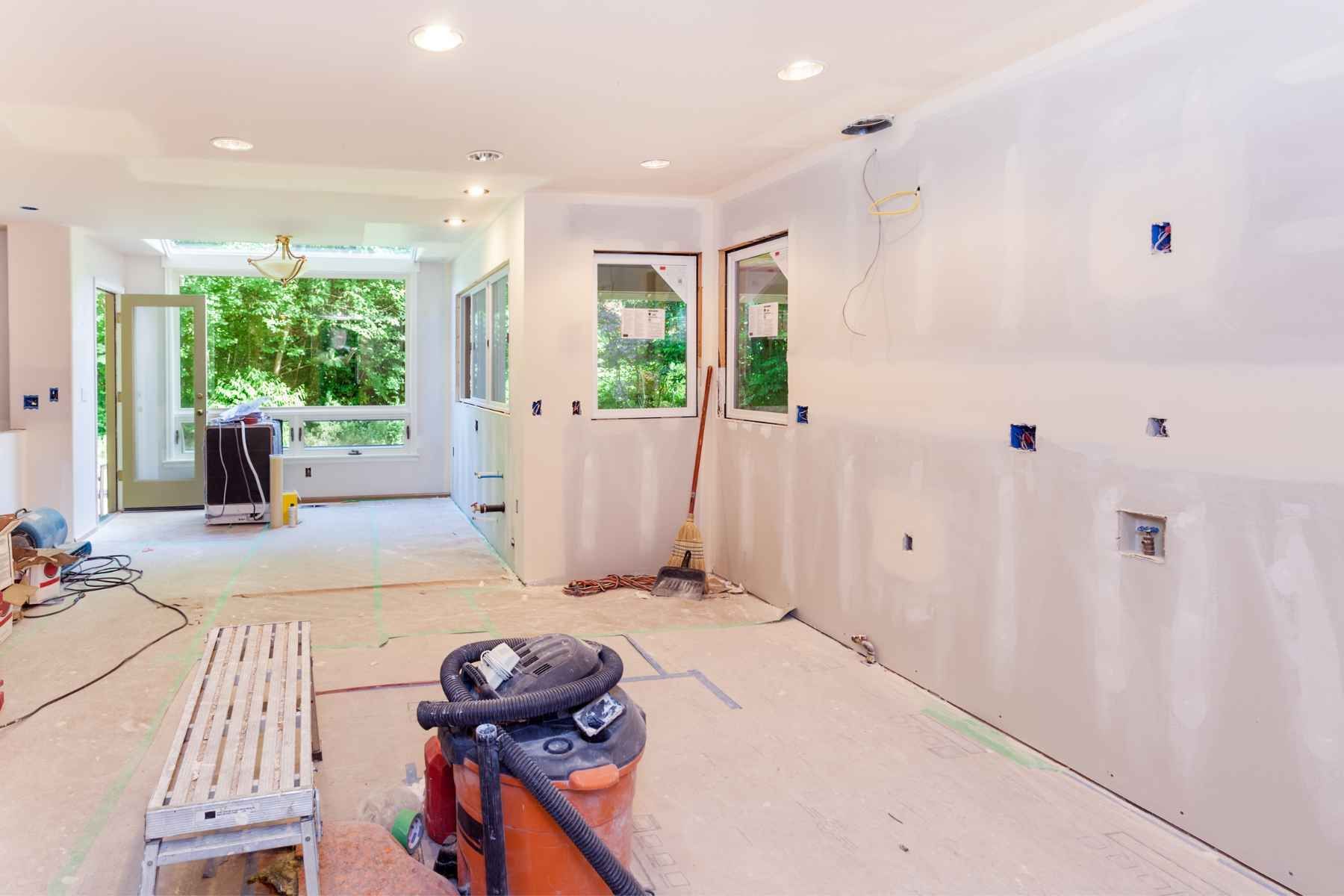
Drywall installations happen in two major steps: hanging and smoothing.  Drywall is sold in large sheets that, while great for covering large areas quickly, will never exactly match the dimensions of a room.  The very first task during a drywall installation is therefore to measure, plan, and cut the drywall sheets where needed to fit the wall.  Cuts must be made not only for corners, windows, and doors, but also for electrical outlets, air vents, and any other openings you may need.


Once the drywall pieces are ready, it is time to secure them to the wall.  Starting in one corner of the room, we apply drywall adhesive to the studs that will be covered by the first sheet.  The drywall is lifted into place, pressed against the adhesive, then secured with drywall screws.  Screws must be evenly spaced to prevent issues in the future, and the best practice is to start from the center of the drywall sheet and work out to the edges.


This process is continued, sheet by sheet, until the entire room (and ceiling, if needed) are covered.  There will be small gaps between each sheet of drywall at this point - these are necessary to prevent cracks as the building expands and contracts.


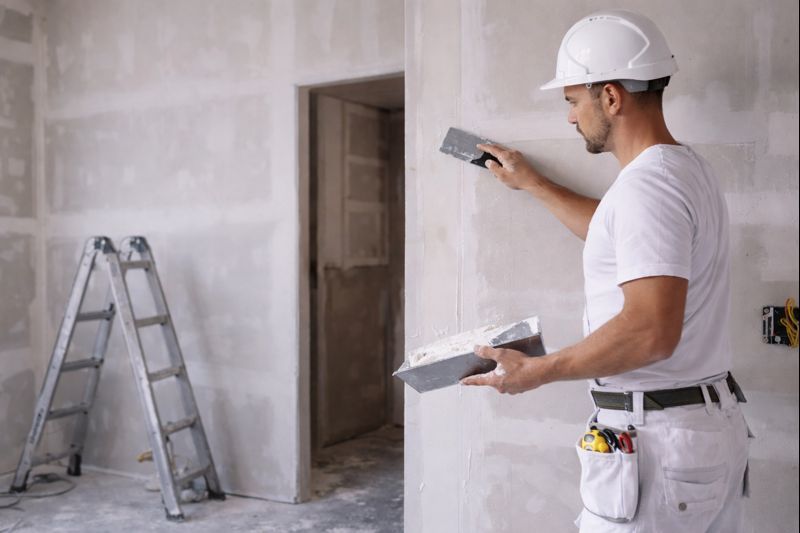
We don’t want these gaps to be visible, however, which brings us to the next major step: smoothing!  Creating a smooth, solid surface requires several coats of drywall compound (also known as “mud”) and tape.  Each gap is filled with a thin layer of drywall mud, covered with drywall tape, then smoothed over with another layer of mud.  These first two coats of drywall mud must be allowed to fully dry before the final layer can be added.


There will also be indentions where the screws that hold up the drywall are - these are also filled with drywall mud.  Once everything is dry, a final coat of drywall mud is applied to the gaps between sheets and to any screws as needed.  We then wait for everything to dry one final time.


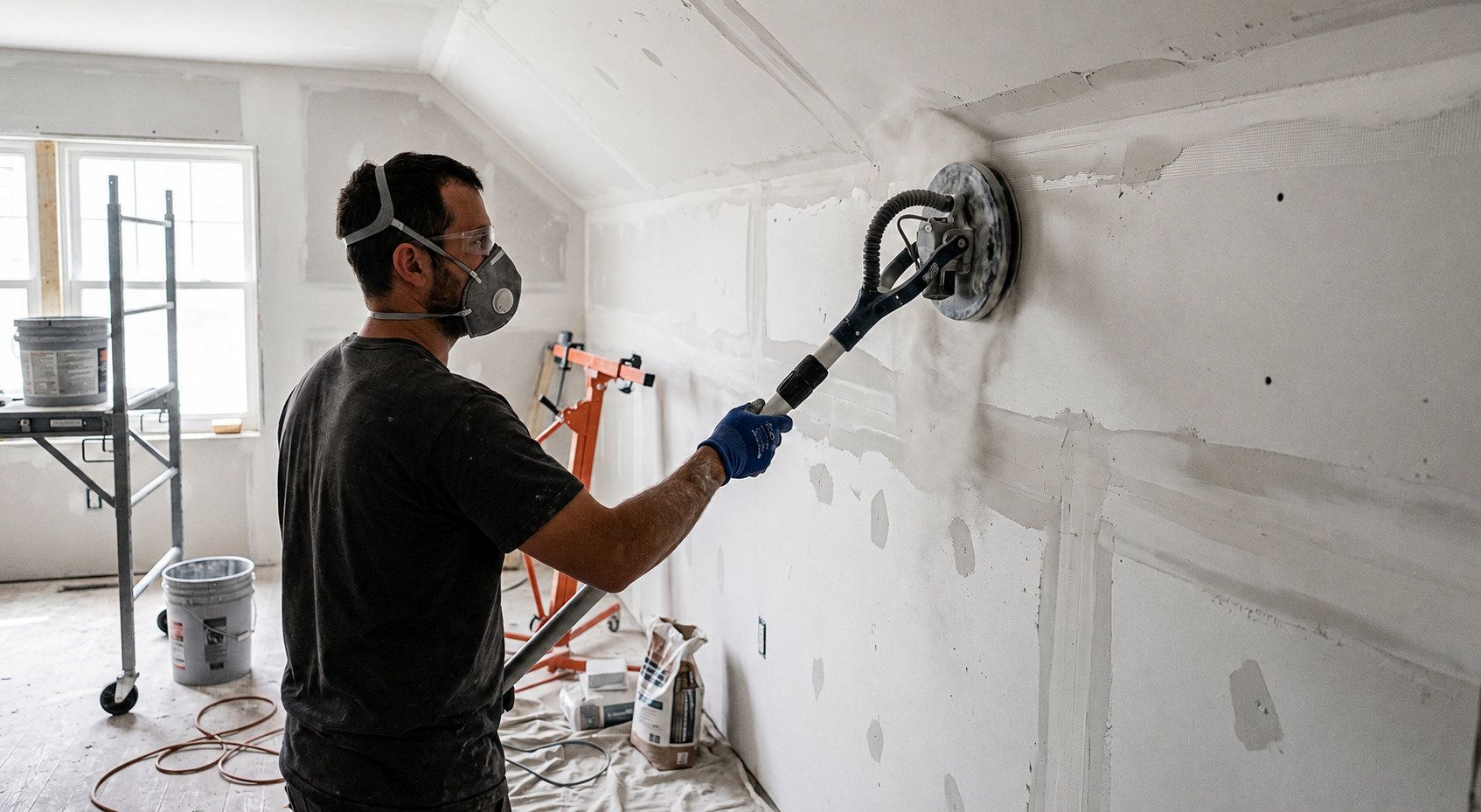
The walls are now seamless, but they aren’t as smooth as they should be yet.  There is one final step to get the drywall ready for painting - sanding.  Using increasingly fine grits of sandpaper, we gently sand everywhere we applied drywall mud until it is smooth to the touch.  After we have cleaned up the dust created by sanding, the drywall installation is complete and you are ready to paint!


Basic drywall installation is a straight-forward process, but to do it well requires technical skills and great attention to detail.  For sturdy, seamless walls that perfectly accentuate your interior decor, call our drywall installation professionals for your next project!


You might also like
January 4, 2026
The Importance of Professional Drywall Work
June 4, 2025
Noticed a crack above your doorframe? A weird bubble under the paint? Or maybe your drywall has seen better days after years of wear and tear? If you’re wondering whether to patch things up or start fresh, you’re not alone. At Drywall Victoria CNL , we get this question all the time: "Should I repair my drywall, or does it need to be replaced entirely?" Let’s break it down simply, so you know what’s best for your home and your wallet.
May 2, 2024
Embarking on a do-it-yourself (DIY) drywall project can be both rewarding and challenging. Whether you're repairing a small hole or tackling a larger renovation, having the right tools and equipment is crucial for achieving professional-looking results. In this guide, we'll outline the essential drywall tools and equipment that every DIYer should have in their arsenal. Utility Knife A sharp utility knife is indispensable for cutting drywall panels to size, scoring and snapping them along straight lines, and trimming edges with precision. Look for a retractable knife with a comfortable grip and replaceable blades for efficiency and safety. Taping Knife Taping knives come in various sizes, but a 6-inch and 12-inch knife are essential for applying joint compound (mud) and smoothing tape during the taping and mudding process. Opt for stainless steel blades for durability and easy cleanup. Drywall Saw or Jab Saw For cutting openings for electrical outlets, light switches, or plumbing fixtures, a drywall saw or jab saw is indispensable. These saws feature sharp teeth designed to cut through drywall cleanly and efficiently. Drywall Screw Gun Driving screws into drywall by hand can be tedious and time-consuming. A drywall screw gun, specifically designed for this purpose, makes the task much faster and more effortless. Look for a screw gun with depth adjustment settings to ensure consistent screw depth without damaging the drywall surface. Drywall T-Square A drywall T-square is essential for marking and cutting straight lines on drywall panels accurately. This L-shaped tool provides a straight edge for scoring and snapping panels cleanly along predetermined measurements. Mud Pan A mud pan is a shallow, flat-bottomed container used for holding and mixing joint compound during the taping and mudding process. Choose a stainless steel or plastic mud pan with tapered sides for easy scooping and minimal waste. Sanding Block or Pole Sander After applying joint compound, sanding is necessary to smooth out imperfections and achieve a seamless finish. A sanding block or pole sander fitted with fine-grit sandpaper is ideal for this task, ensuring smooth, uniform results without damaging the drywall surface. Corner Trowel To achieve clean, crisp corners when taping and mudding inside corners, a corner trowel is indispensable. This specialized tool features a narrow blade designed to fit into tight spaces and create smooth, straight edges along corners. Drywall Lift (Optional) For larger projects or ceiling installations, a drywall lift can be a game-changer. This mechanical device holds drywall panels in place, allowing a single person to lift and position panels accurately without assistance. While not essential for small-scale DIY projects, a drywall lift can significantly reduce strain and simplify the installation process for larger jobs. With the right tools and equipment at your disposal, tackling a DIY drywall project becomes much more manageable and enjoyable. Whether you're patching a small hole or renovating an entire room, investing in high-quality tools designed specifically for drywall work will help you achieve professional-looking results and save time and frustration in the process. If you ever get in over your head on your project, don't hesitate to call us. Our drywall installation and repair experts are always ready to help!
estimated_quoteArtboard 3

FREE QUOTE

Request a quote

Contact Us